TNB Bill Going Up Again? Why More Malaysians Are Looking Into Solar
No spam, only helpful information.
Have you ever opened your TNB bill and wondered why the amount changed even though your usage feels almost the same?
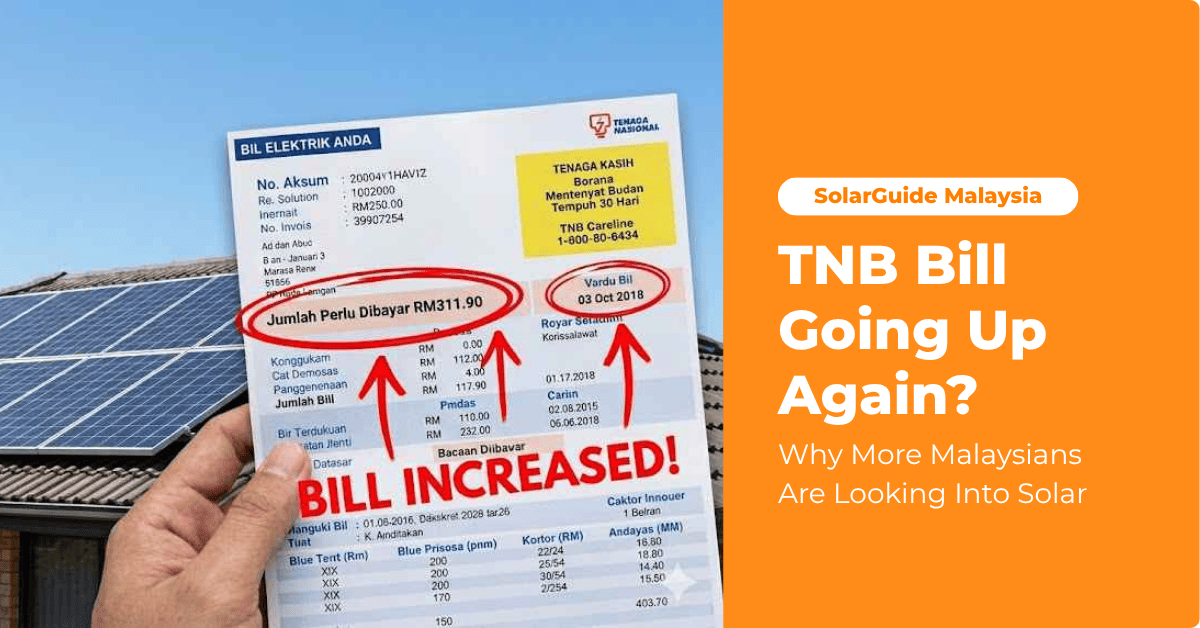
That is something many Malaysians are starting to notice lately.
Recently, TNB announced an update to the AFA rate, which is part of the electricity pricing adjustment mechanism in Malaysia. While the latest adjustment showed a small rebate, it also reminded many users of one thing: electricity costs can still fluctuate from time to time.
And naturally, one question starts coming up more often.
“Should I finally look into solar?”
Is solar Malaysia really worth considering now?
A few years ago, many people thought solar was only for large bungalows or factories.
Today, that is no longer the case.
With rising awareness about electricity costs, more homeowners in Malaysia are exploring solar ATAP and rooftop solar systems as a way to manage their monthly TNB bill more comfortably.
Especially for homes with:
- Air conditioners running daily
- EV charging
- Large families
- High daytime electricity usage
- Monthly bills above RM500
The higher the usage, the more noticeable the savings can become over time.
So how much can solar actually save?
This is usually the first thing people ask. Let us look at a simple example.
Example Calculation for a Malaysian Home
| Monthly TNB bill now: RM500 |
| Estimated solar savings: 60% |
| Estimated monthly savings: RM500 × 60% = RM300 savings per month |
| Estimated remaining TNB bill: RM200 |
Now let us estimate yearly savings.
RM300 × 12 months = RM3,600 yearly savings
If the homeowner installs a solar system that costs around RM20,000 to RM22,000, the estimated return period could be around: 5 to 6 years.
Is your bill around this range? Reach out to SolarGuide to explore suitable solar package options for your home.
And since solar panels are designed to last much longer, many homeowners see it as long term protection against rising electricity costs.
Of course, actual savings depend on:
- Roof condition
- Sunlight exposure
- Daytime electricity usage
- System size
- TNB tariff changes
But this gives new users a rough idea of how solar works financially.
Will solar completely remove your TNB bill?
Not exactly. This is one of the biggest misunderstandings people have.
A solar system helps reduce your dependency on grid electricity during the daytime. So instead of pulling everything from TNB, your home uses the energy generated from your own rooftop.
That means your TNB bill can become lower and more manageable, but not necessarily zero.
Still, many Malaysians prefer having better control over their long term electricity cost instead of waiting for future tariff changes.
So why are people suddenly talking about Solar ATAP?
You may have seen this term appearing more often recently. Solar ATAP is basically Malaysia’s rooftop solar initiative that allows homes and businesses to install solar systems for their own usage.
In simple terms, it makes solar adoption more structured and accessible for Malaysians. And because electricity pricing can change over time, many users now see solar less as a luxury and more as a long term planning decision. Kind of like fixing part of your future electricity cost before prices shift again.
❓The problem? Too many solar packages in the market.
This is where many homeowners get stuck.
One company says you can save RM200 monthly. Another says RM500.
Some focus on cheap pricing. Others focus on premium brands.
So how do you know which tnb solar package actually makes sense for your home?
The truth is, solar is not really about finding the “cheapest package”.
It is about finding:
- The right system size
- Suitable panel and inverter setup
- Proper warranty support
- Realistic savings estimation
- A proposal that matches your actual TNB usage
A system that is too small may not give meaningful savings; A system that is too big may not give the best return either.
That is why comparing multiple proposals matters.
Final thoughts
With recent discussions around the AFA rate and electricity pricing, more Malaysians are starting to pay attention to their energy usage.
And honestly, that is a good thing.
Solar Malaysia adoption is growing not because people are chasing trends, but because many households want a smarter way to manage their TNB bill long term.
If you are still unsure where to start, SolarGuide helps homeowners compare multiple solar proposals in one place, so you can better understand your options before making any decision.
Start saving on your TNB bills as early as next month. Get a FREE assessment and compare the best solar providers in Malaysia in under 5 minutes.